Following the Flood: Botswana and Zambia in 2026
What this year’s water levels mean for your Botswana and Zambia luxury safari
There is a rhythm to the African wilderness that no itinerary can fully prepare you for. In Botswana’s Okavango Delta, that rhythm is defined by water, its arrival, its spread across ancient floodplains, and its slow withdrawal as the dry season deepens. For the discerning traveller, understanding this cycle is not merely useful background knowledge; it is the difference between a beautiful safari and a genuinely extraordinary one.

This year, the conditions are aligning in a way that seasoned safari experts rarely see. A convergence of high local rainfall and above-average inflows from the Angolan Highlands, where the Okavango River has its source, is producing what is expected to be one of the most remarkable flood seasons in recent memory. The Delta, which spans more than 15,000 square kilometres, is a wilderness that never behaves the same way twice. The waters do not follow a fixed path; they shift, pool, recede and surge according to forces that originate hundreds of kilometres away. That variability is precisely what makes it so compelling and why the expertise of those who know it intimately matters so much.
At The Luxury Safari Company, our team and the people we work with have spent decades reading this landscape. What follows is a camp-by-camp account of what guests can expect across Botswana and Zambia this season and why each area offers something genuinely distinct.

The Shinde Private Concession
Situated east of Chief’s Island on the northern boundary of the Moremi Game Reserve, the Shinde concession, home to both Shinde camp and the intimate Shinde Footsteps, has historically been one of the wetter corners of the Delta, and this year is no exception. High water levels are anticipated, which means the emphasis shifts beautifully towards the water: long mokoro glides through papyrus-lined channels, motorboat excursions across expansive lagoon systems and the particular pleasure of drifting through a flooded forest at golden hour. Some of the dry-land game drive routes will contract as waters rise from April, but what guests lose in land range, they gain in an entirely different dimension of the Delta. The wildlife remains, lions still move through, leopards still ghost between the islands as they simply become part of a watery tableau that feels prehistoric and utterly alive.
Shinde itself, rebuilt in 2020 and awarded five-star status by the Botswana Tourism Board, offers a treehouse-style main area perched above a permanent lagoon, a design that feels made for a season such as this. Shinde Footsteps, by contrast, is deliberately minimal in its environmental footprint, a camp that asks guests to slow down and let the Delta take over.

The Kanana Private Concession
West of Chief’s Island, the Kanana concession occupies the southern end of the Xo Flats, a region that has been comparatively drier in recent years. That dryness has concentrated wildlife with remarkable consistency, and even as this season’s waters arrive, the inundation here is expected to be gradual and measured. Mokoro is anticipated to be ideal from May through to mid-November, with boating conditions opening from June through to mid-September. Crucially, game viewing across the concession is expected to remain richly accessible throughout the year.
For guests, this offers a compelling combination: the spectacle of the flood’s slow arrival alongside some of the Delta’s most rewarding land-based game drives. The camp holds exclusive access to one of Southern Africa’s largest heronries, and when the waters are right, watching the colony from a mokoro as the Delta wakes around you is one of those moments that stays with you permanently.
The recently opened Kanana Nyana joins Kanana within this same concession, bringing a new level of calm, considered luxury to an already exceptional area. For those seeking exclusivity combined with ecological richness, this pairing is difficult to surpass.

Okuti Camp and the Xakanaxa Region
Within Moremi Game Reserve, Okuti Camp presides over the Xakanaxa region, long regarded as one of the most consistently productive wildlife areas in the entire Delta. This year, above-average water levels are expected to make it ideal for water-based exploration: boat cruises, barge excursions and mokoro all come into their own here. While some game drive areas will yield to the flood, the concession is large enough that land activities remain genuinely rewarding. This is a landscape that supports both aquatic and terrestrial ecosystems simultaneously, and the wildlife sightings reflect that biological richness at every turn.
Maxa: Where the Delta Meets the Selinda Spillway
In the vast NG12 concession of the northern Okavango, at the point where the Delta flows towards the Selinda Spillway, sits Maxa, opened in early 2025 and built entirely around the spirit of exploration. This season, water levels comparable to 2025 are expected, making boating and mokoro outstanding pursuits through to the end of October. Game drives will be more selective as smaller islands become inaccessible, but this is precisely the kind of constraint that Maxa’s guides embrace with enthusiasm, pushing further, seeking wider, always returning with something unexpected.
Accommodating just twelve guests at a time, Maxa is intimate by design. Wood-fired meals, handmade local furniture and a camp philosophy that values discovery over comfort, though it manages to offer both.

Zambia: Liuwa Plain National Park
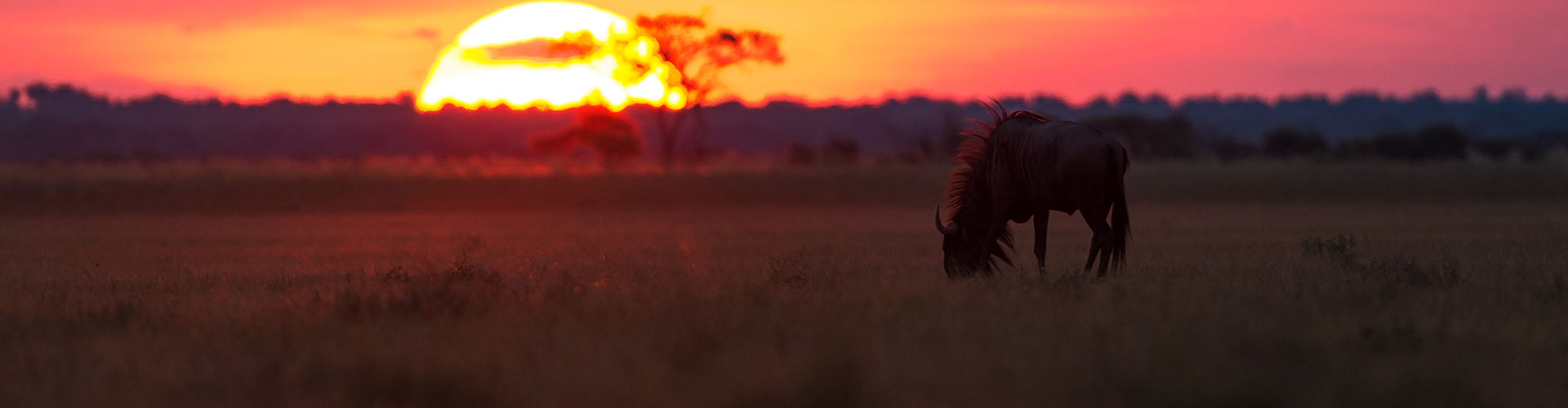
Beyond the Delta’s boundaries, in the far west of Zambia, lies one of Africa’s most under-visited and truly wild places. Liuwa Plain National Park, managed by African Parks in partnership with the Barotse Royal Establishment, encompasses nearly 337,000 hectares of grassland, seasonal wetland and ancient woodland. It is home to Africa’s second-largest wildebeest migration and to a growing population of lions, wild dogs, cheetahs, and hyenas, restored through decades of dedicated conservation work.

At King Lewanika Lodge, this season has brought high rainfall across the region. The Zambezi’s elevated levels are pushing water back up the tributaries that flow out of Liuwa, creating an extraordinary current mix of game drives, canoeing and guided nature walks across a landscape that feels untouched by the modern world. Liuwa holds accreditation as an Important Bird and Biodiversity Area, protecting globally threatened species and significant congregations of waterbirds. This means birders will find it every bit as rewarding as those drawn by the plains game.
Water levels are expected to ease gradually through to the end of June, opening increasing areas for game driving as the season progresses and wildlife numbers here are growing year on year. For guests seeking a Zambia luxury safari that goes well beyond the familiar routes, Liuwa is a destination that leaves a lasting impression.

Planning Your Journey
Combining Botswana and Zambia in a single itinerary allows guests to experience two of Africa’s most distinct ecosystems: the fluid, island-dotted abundance of the Okavango Delta and the vast, sky-wide openness of the Liuwa Plain. The water defines both, arriving differently, retreating on its own schedule, and reshaping what is possible in ways that make every season unique.
Our team plans these journeys with care, matching the rhythm of the water to the specific experiences our guests are seeking. Whether you are drawn to the spectacle of the Delta in full flood, the quieter intimacy of walking safaris as the waters retreat, or the particular thrill of a lesser-travelled destination in western Zambia, we will design every detail around you.
Contact our specialists to begin planning your Botswana and Zambia safari.